
Introduction
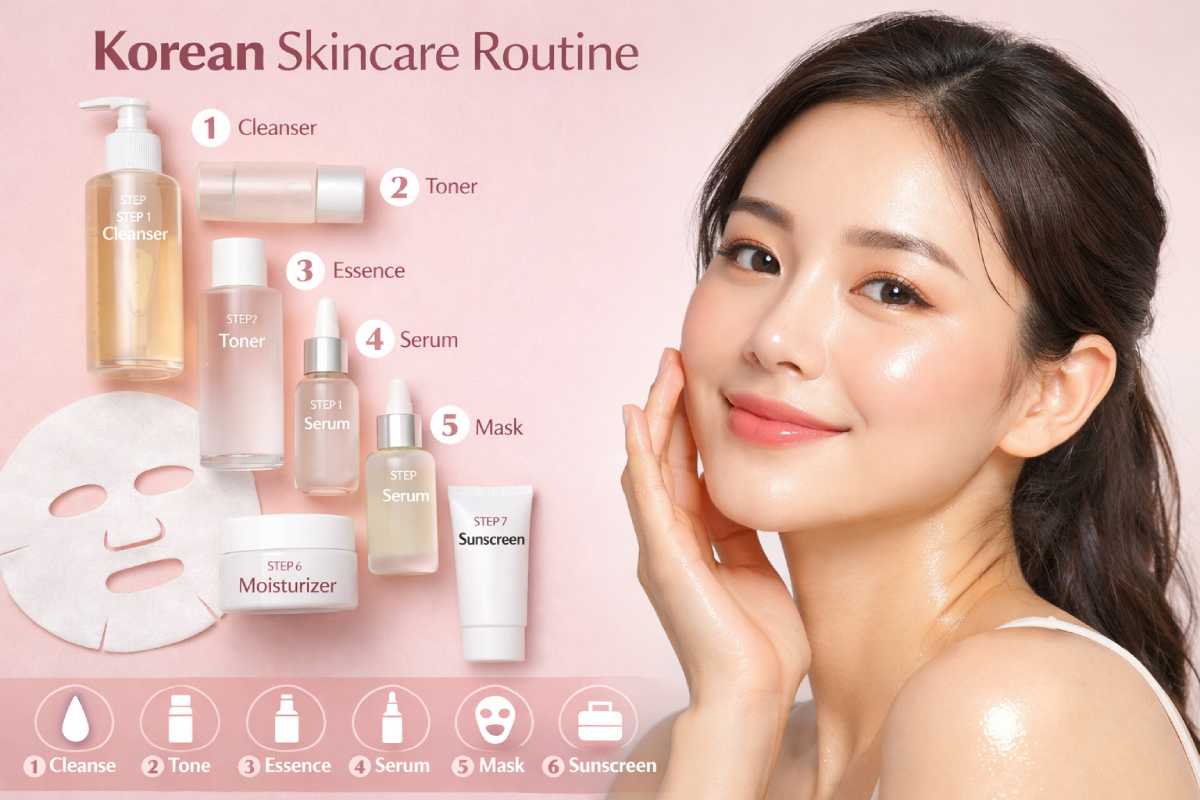
The Korean skincare routine has become one of the most influential beauty trends worldwide. Known for its layered approach, innovative ingredients, and long-term skin health philosophy, Korean skincare focuses on prevention rather than quick fixes. This method prioritizes hydration, gentle treatments, and consistent care to achieve the well-known “glass skin” look—clear, luminous, and smooth skin.
Over the past decade, Korean beauty (often called K-beauty) has expanded globally thanks to innovation, social media influence, and the global popularity of Korean pop culture. The global K-beauty market reached about $14.6 billion in 2024 and is expected to exceed $31.8 billion by 2033, growing at nearly 9% annually.
In South Korea, skincare is deeply embedded in daily life. Studies show around 89% of Korean women follow multi-step skincare routines, while sunscreen use is extremely common across all age groups.
This guide explains how the Korean skincare routine works, the costs, locations where it is popular, expert insights, consumer reviews, and the latest trends shaping the industry in 2025–2026.
Skincare specialists guide Korean routines
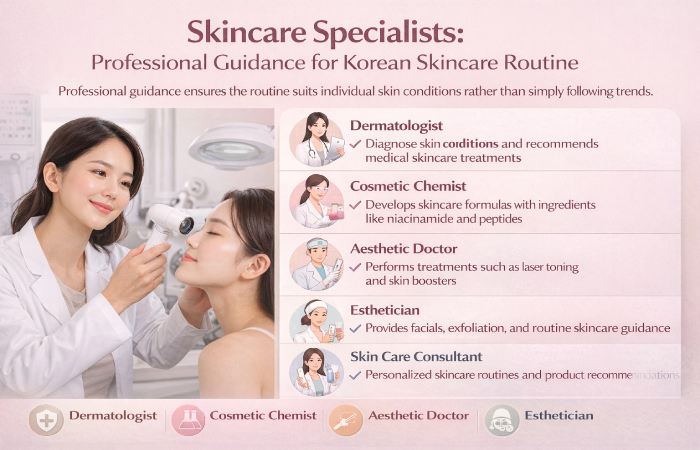
Dermatologists, cosmetic scientists, and aesthetic clinics have played a significant role in shaping Korean skincare routines. Experts often recommend customized routines based on skin type, climate, and lifestyle factors.
Table: Common Specialists Involved in Korean Skincare
| Specialist Type | Role in Skincare Routine | Typical Consultation Cost |
|---|---|---|
| Dermatologist | Diagnoses skin conditions and recommends medical skincare treatments | $50 – $200 |
| Cosmetic Chemist | Develops skincare formulas with ingredients like niacinamide and peptides | Industry professional |
| Aesthetic Doctor | Performs treatments such as laser toning and skin boosters | $150 – $500 |
| Esthetician | Provides facials, exfoliation, and routine skincare guidance | $40 – $120 |
| Skin Care Consultant | Personalized skincare routines and product recommendations | $30 – $100 |
Professional guidance ensures the routine suits individual skin conditions rather than simply following trends.
Prices of Korean Skincare Products and Professional Treatments
Korean skincare routines can vary widely in price depending on the products used and whether professional treatments are included.
Table: Estimated Costs of Korean Skincare Steps
| Skincare Step | Product Type | Average Price Range |
|---|---|---|
| Oil Cleanser | Removes makeup and sunscreen | $10 – $35 |
| Water-Based Cleanser | Cleans pores and dirt | $8 – $30 |
| Exfoliator | Removes dead skin cells | $12 – $40 |
| Toner | Hydrates and balances skin pH | $10 – $45 |
| Essence | Boosts hydration and skin repair | $15 – $60 |
| Serum or Ampoule | Treats specific concerns | $20 – $80 |
| Sheet Mask | Weekly hydration boost | $2 – $10 per mask |
| Moisturizer | Locks in hydration | $15 – $70 |
| Sunscreen | Protects against UV damage | $12 – $40 |
Professional treatments such as laser toning or skin boosters may cost $230–$460 for multiple sessions in South Korea, depending on the clinic.
Global Locations Where Korean Skincare Routines
Although Korean skincare originated in South Korea, its popularity now spans multiple continents.
Table: Regions Where Korean Skincare Is Widely Adopted
| Region | Key Cities | Reason for Popularity |
|---|---|---|
| South Korea | Seoul, Busan | Origin of K-beauty innovations |
| United States | Los Angeles, New York | Strong K-beauty retail market |
| Europe | London, Paris | Rising demand for Korean brands |
| Southeast Asia | Singapore, Bangkok | Climate similar to Korea |
| India | Mumbai, Hyderabad, Delhi | Growing interest among Gen Z |
Asia-Pacific remains the largest market, but Western countries are quickly adopting Korean skincare philosophies due to influencer marketing and dermatologist endorsements.
Comparison Between Korean Skincare Routines and Western Skincare Approaches
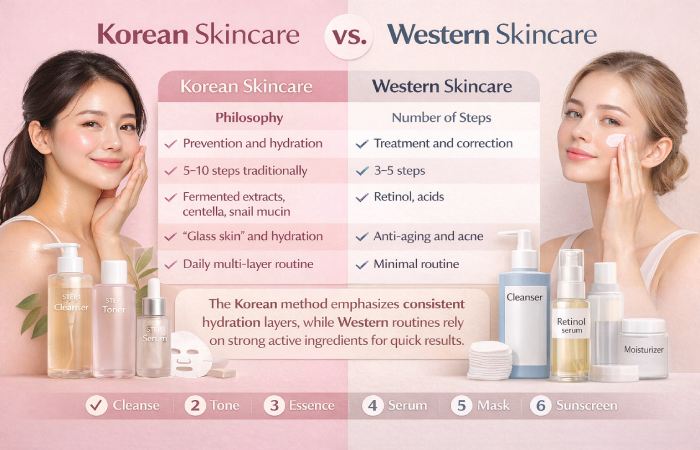
| Feature | Korean Skincare | Western Skincare |
|---|---|---|
| Philosophy | Prevention and hydration | Treatment and correction |
| Number of Steps | 5–10 steps traditionally | 3–5 steps |
| Ingredient Focus | Fermented extracts, centella, snail mucin | Retinol, acids |
| Skin Goal | “Glass skin” and hydration | Anti-aging and acne treatment |
| Routine Frequency | Daily multi-layer routine | Minimal routine |
The Korean method emphasizes consistent hydration layers, while Western routines typically rely on strong active ingredients for quick results.
Consumer Reviews and Real-World Experiences
User feedback from beauty communities highlights several benefits and challenges of Korean skincare routines.
Positive Reviews
-
Improved hydration and smoother skin texture
-
Gentle ingredients suitable for sensitive skin
-
Visible improvement in skin glow after consistent use
Many users report noticeable skin improvement within two to three weeks of consistent routine use, especially when hydration and sunscreen are prioritized.
Common Criticisms
-
Multi-step routines can be time-consuming
-
Over-layering products may cause irritation
-
Some routines require experimentation to find suitable products
Interestingly, many Korean dermatologists now recommend simplified routines with 4–6 steps, focusing on skin barrier health rather than strict 10-step routines.
Important New Updates and Trends
The Korean skincare industry continues to evolve rapidly with several major trends.
1. Microbiome-Friendly Skincare
New formulas now focus on balancing the skin’s natural bacteria to reduce inflammation and strengthen the skin barrier.
2. AI-Powered Skin Analysis
Technology companies are developing AI mirrors and apps that analyze skin condition in real time and recommend personalized routines.
3. Vegan and Clean Beauty Products
Consumers increasingly prefer plant-based ingredients and sustainable packaging.
4. Skin Barrier Repair Focus
Modern routines emphasize ceramides, peptides, and hydrating ingredients to repair the skin barrier.
5. Minimalist Skincare (Skinimalism)
Many dermatologists now recommend fewer but more effective products, replacing the traditional 10-step routine with simplified versions.
These trends reflect a shift toward science-backed skincare, sustainability, and personalization.
Conclusion
The Korean skincare routine has transformed the global beauty industry by introducing a holistic, prevention-focused approach to skin health. Instead of relying on aggressive treatments, the Korean method focuses on hydration, gentle ingredients, and long-term consistency.
Between 2025 and 2026, the industry continues to evolve with new innovations such as AI-powered skin diagnostics, microbiome skincare, and sustainable ingredients. These developments demonstrate that Korean skincare is more than just a beauty trend—it represents a growing global movement toward healthier, science-based skincare practices.
For beginners, starting with a simple routine of cleansing, hydrating, moisturizing, and sunscreen can already deliver significant benefits.
Frequently Asked Questions
What is the typical Korean skincare routine?
A typical routine includes cleansing, toning, essence, serum, moisturizer, and sunscreen. Some routines add exfoliation and sheet masks.
How many steps are in Korean skincare?
Traditionally, 10 steps were popular, but most dermatologists now recommend 4–6 steps depending on skin type.
Can beginners follow Korean skincare?
Yes. Beginners can start with a basic routine and gradually add treatments if needed.
Is Korean skincare suitable for all skin types?
Most Korean skincare products focus on gentle ingredients, making them suitable for sensitive, oily, or dry skin.
How long does it take to see results?
Many users notice improved hydration and glow within two to three weeks of consistent use.
Also read: Method To Everyday Skincare