


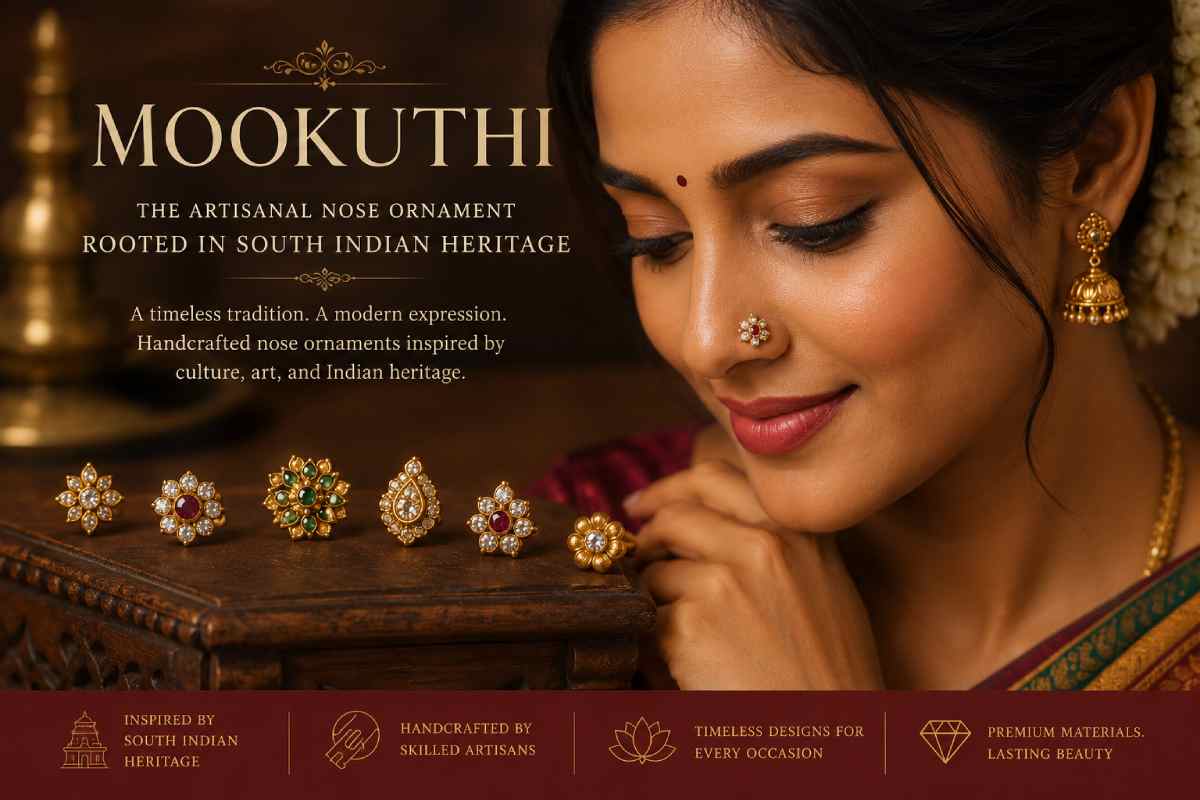
The word “Mookuthi” carries deep cultural meaning in South India. Traditionally, a mookuthi refers to a nose ornament worn by women across Tamil Nadu, Kerala, Karnataka, and other parts of India. Over the years, the nose pin has evolved from a symbol of tradition and identity into a modern fashion statement that blends heritage with personal style.
Today, Mookuthi, the Chennai-based artisanal jewelry brand, has transformed the traditional nose ornament into a luxury craft movement rooted in South Indian storytelling, architecture, art, and handmade craftsmanship. The brand focuses exclusively on handcrafted nose ornaments inspired by temple carvings, kolam patterns, Chettinad aesthetics, and classical South Indian culture.
What Is a Mookuthi?
A mookuthi is a traditional South Indian nose ornament usually crafted in gold, silver, diamonds, or precious stones. It may appear as:
- Tiny nose studs
- Floral nose pins
- Hoops and rings
- Gemstone nose jewels
- Bridal nose ornaments
In Tamil culture, the mookuthi is not just jewelry. It represents femininity, beauty, maturity, spirituality, and sometimes marital identity. Across India, similar ornaments are known by different names such as Nath, Nathni, Phul, or Nose Stud.
Origins and History of Nose Ornaments in India
Historians believe nose ornament traditions traveled into India through Middle Eastern and Mughal influences centuries ago. Over time, Indian communities adapted the style into regional forms and cultural identities.
| Historical Period | Development of Nose Ornament Tradition |
| Ancient Civilizations | Nose piercing seen in Middle Eastern and tribal cultures |
| Mughal Era | Nose jewellery entered Indian royal fashion |
| South Indian Kingdoms | Mookuthi became part of Tamil and Kerala traditions |
| Colonial Era | Jewellery styles became more localized |
| Modern India | Nose pins evolved into fashion and self-expression |
Today, nose jewellery is worn by:
- Brides
- Classical dancers
- Fashion enthusiasts
- Young professionals
- Minimal jewellery lovers
The modern revival of artisanal nose jewellery has increased interest among Gen Z and millennial buyers who want heritage jewellery with contemporary design.
The Rise of Artisanal Jewellery in India
India’s jewellery market has shifted significantly in the last decade. Consumers increasingly prefer:
- Handmade jewellery
- Heritage-based designs
- Limited collections
- Sustainable craftsmanship
- Local artisan support
This shift helped brands like Mookuthi Official Store gain attention among jewellery lovers looking for authentic South Indian artistry.
Unlike mass-produced jewellery, artisanal nose ornaments focus on:
| Artisanal Jewellery Features | Benefits |
| Handcrafted detailing | Unique appearance |
| Cultural storytelling | Emotional connection |
| Small-batch production | Exclusivity |
| Traditional techniques | Preserves Indian craftsmanship |
| Precious materials | Long-term durability |
About the Mookuthi Brand
Founded in Chennai in 2018 by designer Sarath Selvanathan, Mookuthi focuses entirely on nose ornaments. The brand describes the nose ornament as “the smallest yet most impactful ornament.”
The brand draws inspiration from:
- Chola temple architecture
- Kolam art
- Chettinad floor patterns
- South Indian floral aesthetics
- Traditional paintings
- Heritage craftsmanship
Its collections combine:
- Yellow gold
- Diamonds
- Rubies
- White sapphires
- Meenakari work
- Handmade detailing
Popular Mookuthi Collections
The brand has developed several themed collections inspired by South Indian culture.
| Collection Name | Inspiration |
| Athangudi | Chettinad tile geometry |
| Kondai | Traditional floral hair buns |
| Oviyam | Painterly South Indian aesthetics |
| Kolam | South Indian street art patterns |
| Nila | Moon-inspired jewellery |
| Sthapathi | Temple architecture and carvings |
| Vadiviyal | Geometric minimalism |
These collections show how traditional Indian design can become wearable contemporary art.
Why Artisanal Mookuthi Jewellery Is Becoming Popular
Modern Indian buyers are now choosing meaningful jewellery instead of generic mass-market products.
Key Reasons Behind the Trend
| Trend Factor | Explanation |
| Heritage revival | Young buyers reconnecting with traditions |
| Minimal jewellery trend | Nose pins suit everyday fashion |
| Social media influence | Instagram aesthetics and styling |
| Sustainable shopping | Preference for handcrafted products |
| Identity expression | Jewellery as personal storytelling |
According to jewellery industry reports and fashion coverage, traditional Indian ornaments are returning in modern luxury fashion spaces.
South Indian Influence on Modern Jewellery Design
South India has one of the richest jewellery traditions in the world. Temple architecture, Bharatanatyam costumes, silk sarees, and devotional art have heavily influenced modern jewellery makers.
Common South Indian Design Elements
| Design Element | Description |
| Temple motifs | Inspired by Chola carvings |
| Floral patterns | Jasmine, lotus, and vines |
| Kolam geometry | Symmetrical line art |
| Antique gold finish | Traditional appearance |
| Gemstone work | Rubies, emeralds, diamonds |
Mookuthi’s designs especially highlight Tamil heritage through subtle artistic details rather than oversized bridal jewellery.
Cultural Importance of Nose Jewellery in India
Nose jewellery has symbolic importance across many Indian communities.
Cultural Meanings Associated with Mookuthi
| Symbolism | Meaning |
| Femininity | Traditional beauty |
| Marriage | Bridal identity in some regions |
| Spirituality | Religious and ritual significance |
| Social identity | Community traditions |
| Self-expression | Modern fashion and individuality |
Some Ayurvedic traditions also associate left-side nose piercing with women’s health beliefs, though modern medical evidence varies.
Materials Used in Artisanal Mookuthi Jewellery
Premium nose ornaments are crafted using high-quality metals and stones.
| Material | Features |
| 22K Gold | Traditional South Indian choice |
| Diamonds | Luxury minimalism |
| Rubies | Temple jewellery influence |
| White sapphires | Elegant modern finish |
| Silver | Affordable everyday wear |
| Meenakari enamel | Artistic color detailing |
Artisans often spend several days or weeks crafting a single intricate design.
How to Choose the Right Mookuthi
Selecting a nose ornament depends on face shape, style preference, and comfort.
Nose Pin Selection Guide
| Face Shape | Recommended Style |
| Round face | Angular or elongated designs |
| Oval face | Most styles suit well |
| Square face | Floral or circular patterns |
| Heart-shaped face | Small studs and delicate designs |
Based on Occasion
| Occasion | Suggested Style |
| Daily wear | Minimal diamond studs |
| Weddings | Ornate gemstone mookuthi |
| Festivals | Traditional gold patterns |
| Modern styling | Geometric designs |
Mookuthi and Modern Fashion
Today’s styling trends combine traditional nose jewellery with:
- Sarees
- Indo-western outfits
- Kurtis
- Minimal luxury fashion
- Streetwear aesthetics
Fashion influencers and jewellery stylists increasingly promote nose jewellery as a statement accessory rather than only a traditional symbol.
Chennai as a Jewellery Craft Hub
Chennai has long been known for:
- Temple jewellery
- Gold craftsmanship
- Classical South Indian aesthetics
- Handmade artisan networks
Brands like Mookuthi are helping Chennai become a destination for contemporary artisanal jewellery innovation.
Digital Growth of Artisanal Jewellery Brands
Social media has transformed jewellery marketing in India.
Platforms Driving Growth
| Platform | Impact |
| Visual storytelling | |
| Design inspiration | |
| YouTube | Styling and piercing videos |
| WhatsApp commerce | Personal consultations |
| Online stores | Nationwide accessibility |
Artisanal jewellery brands now use storytelling-focused marketing instead of traditional catalogue advertising.
The Future of Artisanal Nose Jewellery in India
The Indian artisanal jewellery industry is expected to grow because consumers increasingly value:
- Cultural authenticity
- Handmade products
- Local craftsmanship
- Sustainable luxury
- Regional identity
Nose ornaments are no longer limited to traditional ceremonies. They are becoming global fashion pieces influenced by Indian heritage.
Challenges Faced by Artisanal Jewellery Brands
Despite growing popularity, artisanal brands face several challenges.
| Challenge | Impact |
| Mass-produced imitation products | Reduced uniqueness |
| Rising gold prices | Higher product costs |
| Skilled artisan shortage | Limited handcrafted production |
| Fast fashion competition | Price pressure |
| Counterfeit online sellers | Consumer trust issues |
However, premium artisanal brands continue to attract customers seeking authenticity.
Influence of Traditional Art Forms on Jewellery
South Indian art forms deeply influence artisanal jewellery.
Examples
| Art Form | Jewellery Influence |
| Kolam | Symmetrical line patterns |
| Temple sculpture | Architectural motifs |
| Classical dance | Ornament shapes |
| Chettinad tiles | Geometric detailing |
| Raja Ravi Varma paintings | Color palettes |
Researchers have even studied Kolam patterns mathematically because of their geometric precision.
Why Consumers Prefer Handmade Jewellery Today
Handmade jewellery creates emotional value that machine-made products often lack.
Consumer Preferences
| Handmade Jewellery | Mass-Produced Jewellery |
| Unique designs | Repetitive styles |
| Cultural meaning | Generic fashion |
| Artisan craftsmanship | Factory production |
| Limited pieces | Large inventory |
| Emotional storytelling | Commercial appeal |
This shift has strengthened the demand for niche jewellery labels.
Conclusion
Mookuthi represents more than a jewellery brand. It reflects the revival of South Indian artistry, identity, and storytelling through one of India’s smallest yet most expressive ornaments.
As India’s artisanal jewellery movement grows, handcrafted nose ornaments are becoming symbols of heritage, individuality, and timeless beauty. Whether worn traditionally or styled in a modern way, the mookuthi continues to evolve while staying deeply connected to South Indian culture.
The rise of brands like Mookuthi Official Website shows how traditional craftsmanship can successfully adapt to contemporary luxury fashion without losing its roots.